The Islamic Republic Is on the Ropes, and the Abraham Accords Remain a Foundation for Regional Peace
Listen tothis article
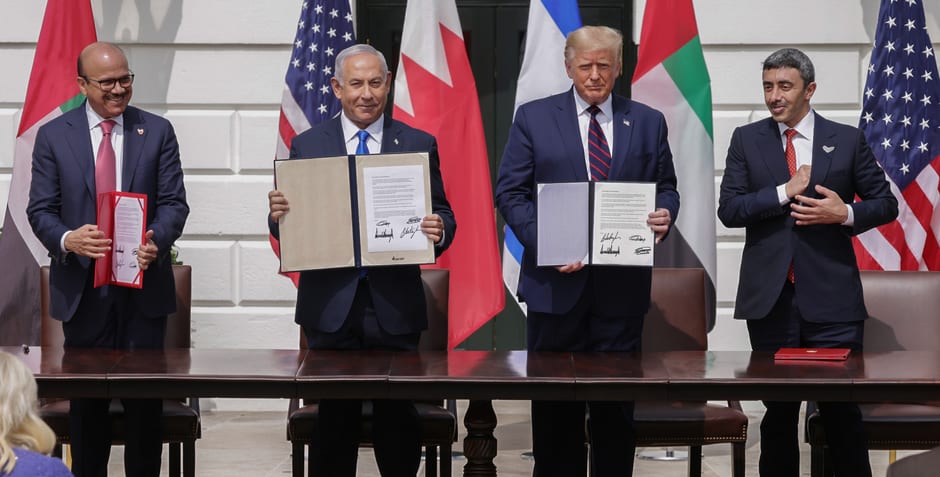
This week marked the sixth anniversary of the signing of the Abraham Accords – a day on which Israel, the UAE, and Bahrain took a giant step toward regional peace (followed shortly thereafter by Morocco, Sudan, and later by Kazakhstan). It was one of my proudest moments as Secretary of State, and a great achievement for America and all who desire peace in the Middle East.
While the progress along that path to coexistence was interrupted by the horrific attacks of October 7 – atrocities carried out by Iranian proxies in service of the Islamic Republic’s goal of destroying the state of Israel. But with Iran’s military and nuclear capabilities severely degraded and the regime on the ropes, there’s a real opportunity to hasten the region’s transformation by expanding the membership of the Abraham Accords.
In the six years since their signing, the Accords have already unlocked enormous opportunities for economic partnership, innovation, and cultural exchanges once thought impossible. By 2023, annual trade and investment between Israel and the Abraham Accords countries combined exceeded an estimated $10 billion. Tourism between Israel and partners like the UAE and Morocco has skyrocketed; university student exchange programs were established; and new forums for intercultural dialogue and understanding have been established. That’s good for the Middle East, good for America’s economic and security interests, and good for mankind.
The Accords were also important because they rejected the old “peace process” model that often amounted to little more than appeasement. Instead, the Israeli and American governments cultivated partnerships with countries willing to reject violence and perpetual grievance in favor of peace and prosperity. That willingness to upset the status quo has already yielded enormous dividends and has seriously discredited the failed policies that dominated Western statecraft in decades past. Combined with President Trump’s “maximum pressure” policies against Iran, it dealt a serious blow to the regime that has been the key source of attacks on Israel and instability throughout the region.
Today, Iran is badly wounded, but determined to use every means at its disposal to ensure the survival of its murderous regime. That includes attacking neighbors like the UAE, Bahrain, Kuwait, and Saudi Arabia; blocking international shipping lanes in the Strait of Hormuz; and using its Houthi proxies to attack Saudi shipping and oil facilities.
It is in the Saudi government’s interest not only to destroy Iran’s proxies, but to comprehensively defeat the Iranian government so that it can no longer wreak havoc in the region. As the spiritual home of Islam, Saudi membership in the Abraham Accords would add enormous momentum to that effort and make a definitive statement that the region’s future lies not in the Iranian model of perpetual war against Israel, but in diplomatic and economic partnership.
With the Islamic Republic on the ropes and its “ring of fire” in tatters, the time is ripe for change. It is in the interest of all nations – but especially those in the Middle East – to put the era of terrorism and instability behind them and pursue the path to genuine peace and prosperity.